
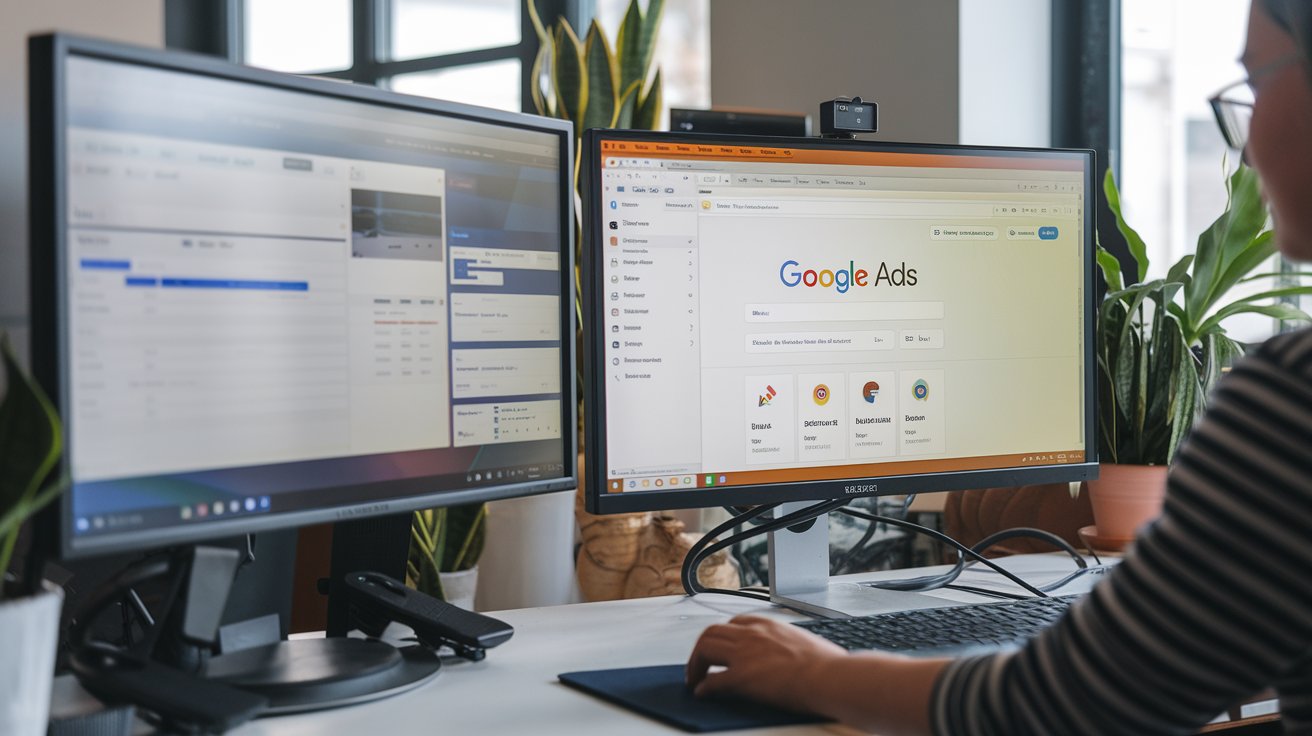
Every marketing budget conversation eventually lands on the same fork: put the next dollar into Google Ads or into SEO. Owners usually hear the debate in slogans. Ads are renting, SEO is owning. Ads are instant, SEO is forever. Slogans do not allocate budgets, so let's run the actual numbers on what $1,500 a month buys in each channel for an Arkansas small business in 2026.
$1,500 into Google Ads: what you get
Split a $1,500 ads budget the way most professional setups do and it looks like this: roughly $1,100 to $1,200 in ad spend, with $300 to $400 in management, whether that is an agency fee or the honest cost of your own time.
What the spend buys depends entirely on your cost per click. In Arkansas markets we see:
- General home services (lawn care, cleaning, handyman): $3 to $8 per click
- Skilled trades (HVAC, plumbing, roofing): $8 to $25 per click
- Legal and medical: $20 to $60 per click, sometimes worse
Take a plumber at $12 a click. $1,150 in spend is about 95 clicks. At a typical 10 percent landing-page conversion rate, that is 9 or 10 leads. Close a third of them and the month produced 3 jobs. If an average job is worth $600, the channel roughly broke even. If your average job is worth $2,500, the channel printed money and the right move is spending more, not less.
That is the honest profile of Google Ads: it is a vending machine. Money in, leads out, within days. Three things to respect about it:
- It starts fast and stops faster. Pause the budget and the leads stop the same afternoon. Nothing accumulates except account history.
- The math is knowable within 60 days. You will know your cost per lead by week three and your cost per customer by week eight. No other channel confesses this quickly.
- It punishes sloppy setup. Broad match keywords, no negative keyword list, and traffic going to your homepage instead of a landing page will quietly double your cost per lead. Most wasted ad spend we audit is setup error, not platform failure.
$1,500 into SEO: what you get
The same $1,500 buys 10 to 15 hours of skilled work a month: content targeting keywords your buyers actually search, technical fixes that let Google crawl and trust your site, and local work on your Google Business Profile, citations, and reviews.
For the first 90 days, the honest answer is that you get very little you can deposit. Rankings for competitive terms move slowly. This is the part of the comparison where impatient budgets die.
Then the compounding starts. A page that reaches the top three for a buying-intent keyword produces clicks every month without new spend. Twelve months of consistent work typically leaves an Arkansas small business with 15 to 30 pages that rank, a Google Business Profile that shows up in the map pack, and an organic lead flow that costs whatever you paid last year, amortized. The marginal cost of the next organic lead trends toward zero. Ads never do that; the 500th click costs the same as the first.
SEO's honest profile is a construction project: slow, cumulative, and durable. It also fails differently. Bad ads waste money and stop there. Bad SEO, the thin-content and junk-link kind, can leave your site worse off than doing nothing at all.
The decision framework: three questions
1. Do you need leads this month to make payroll? Then ads, full stop. SEO cannot solve a cash-flow problem. Run ads until revenue is steady, then diversify.
2. Can you hold a budget line for six months without flinching? SEO's returns live on the far side of that window. If a slow quarter would make you cut the line at month four, the first three months were wasted. Fund it only if you can finish it.
3. What is a customer worth over their lifetime? High lifetime value makes both channels work at almost any reasonable cost per lead. Low ticket sizes and thin margins push you toward SEO, because paying $40 per click for a $150 job never balances.
How the split usually plays out
For most established Arkansas businesses, the answer is a sequence, not a choice:
- Months 1 to 3: Weight the budget toward ads, roughly 70/30. Ads produce leads now and something more useful: data. The search terms that convert into paying customers in your ads account are a bought-and-paid-for keyword research report.
- Months 4 to 12: Shift toward 50/50, then 30/70. Point the SEO work at the exact keywords ads proved profitable. You are converting rented ground into owned ground, one keyword at a time.
- Ongoing: Keep ads running for the terms SEO has not captured and for instant coverage when you launch a new service. Cut them keyword by keyword as organic takes over.
A business that runs this sequence for 18 months usually ends up paying less per lead than either channel alone would have delivered, because each channel covered the other's weakness: ads covered the wait, SEO killed the rent.
The answer nobody wants
Google Ads versus SEO is the wrong fight. The right question is sequencing: which channel goes first, and when does the weight shift. Getting that order right matters more than picking a side. Try the search test in our Google Ads vs Facebook ads guide before you pick a platform.
Stone Path Consulting manages both channels for Arkansas businesses and reports them side by side, cost per lead against cost per lead, so the budget shifts on data instead of opinions. If you want to know what your market's click prices and keyword difficulty say about your first $1,500, call 501.232.1017 or email info@stonepathconsulting.com. The numbers conversation is free.